



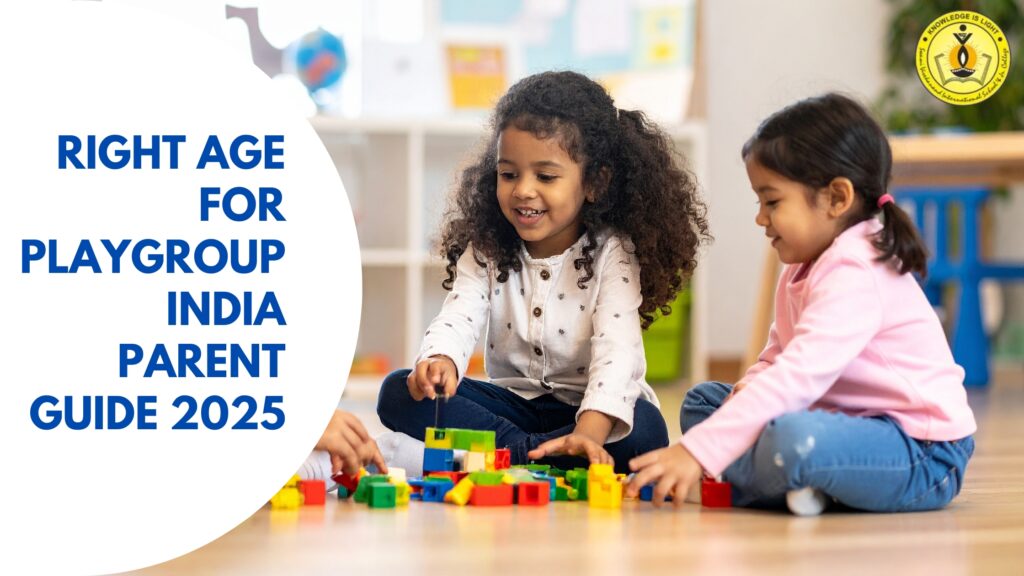
When you watch other children heading to preschool, it’s natural to wonder :“What is the right age for playgroup for my child?”
Every parent faces this emotional dilemma. Sending your little one to school for the first time brings excitement, concern, and a hundred questions. Although playgroup seems like a small beginning before nursery, it becomes the foundation for how a child learns, socializes, and adjusts to the world beyond home.
This guide will help you understand the recommended early learning age and explain how choosing the right school — especially a school following the ICSE approach — can make all the difference.
What Is the Right Age for Playgroup in India?
The recommended age for playgroup in India is 1.5 to 2.5 years.
At this stage, toddlers begin to:
- Explore their surroundings
- Recognize people and routines
- Show curiosity about new experiences
- Interact with other children
For many, preschool becomes their first exposure to learning outside home — which is why choosing a structured, safe, value-based school environment matters so much.
ICSE-based preschools are known for encouraging curiosity, independence, and early language development right from playgroup, making the transition smoother.
Developmental Signs That Your Child Is Ready for Playgroup
Readiness is more important than age. Your child may be ready if they:
- Show curiosity about new places, toys, and people
- Feel comfortable without a parent for short durations
- Understand simple instructions
- Display basic motor skills
- Enjoy playing alongside other children
Even if your child doesn’t show all these signs yet, don’t worry. Every child has a unique rhythm.
Ideal Age for Nursery Admission in India
The recommended nursery admission age is 3 to 4 years.
By this age, children:
- Form clearer sentences
- Enjoy group activities
- Start recognizing letters, numbers, and patterns
- Develop early writing strokes
- Show better emotional control
Nursery becomes an important stepping stone before formal schooling — and ICSE schools excel here because their curriculum is conceptual, age-appropriate, and holistic.
Playgroup vs Nursery – What’s the Difference?
Playgroup (1.5 to 2.5 years)
- Free play and exploration
- Sensory and motor skill activities
- Emotional independence
- Social exposure
Nursery (3 to 4 years)
- Introduction to phonics
- Number awareness
- Pre-writing strokes
- Storytelling & early communication
Playgroup builds the emotional and social foundation, while nursery develops early academic readiness — both strengths of the ICSE early-years curriculum.
Factors That Influence the Right Age for Playgroup
1. Every Child Develops Differently
Some children adapt instantly; others take time. Emotional comfort is more important than age.
2. Home Environment
If your child gets limited social interaction at home, preschool can help them open up.
If there is enough stimulation at home, you can wait a few months.
3. Preschool Philosophy & Curriculum
Preschools vary — Montessori, activity-based, and structured learning models.
Parents who prefer a balanced, concept-driven, English-rich environment often choose ICSE schools, as they emphasize early comprehension, creativity, and communication.
4. Emotional & Social Readiness
Signs include:
- Comfort with unfamiliar faces
- Ability to express basic needs
- Curiosity to join activities
- Reduced separation anxiety
Age matters, but emotional readiness matters more.
Why ICSE Schools Are a Better Choice for Early Learning
While many boards focus on rote or early academics, ICSE schools focus on building strong foundations during playgroup and nursery. They offer:
- A child-centric, activity-based approach
- Strong English language development
- Concept-based learning instead of memorization
- Creative freedom through music, art, drama, and hands-on activities
- Holistic growth across physical, emotional, and cognitive areas
This ensures children transition smoothly from preschool to higher grades with confidence and clarity.
Conclusion
Every child has their own pace, personality, and comfort zone. There is no one perfect age for every child — only the right age for your child.
What matters most is patience, observation, and choosing the right school environment.
When children enter preschool when they’re emotionally ready, learning becomes joyful.
As discussed in this complete parent guide, don’t let comparisons or pressure influence your decision. Choose a playgroup or nursery that aligns with your child’s needs and offers the strong foundation that ICSE schools are known for.
Common Concerns Parents Have About Early Learning Age
“Is my child too young?”
If the child struggles with communication or separation, wait a few months. A slow transition often works best.
“Will they adjust socially?”
Most children settle within 2–4 weeks. Experienced teachers — especially in structured ICSE preschools — help children adjust smoothly.
“What if my child starts later than others?”
Starting a little later doesn’t affect long-term learning. Children eventually catch up. Emotional readiness is far more important than early admission.


